Health and Safety Policy for Landscapers Bethnal Green
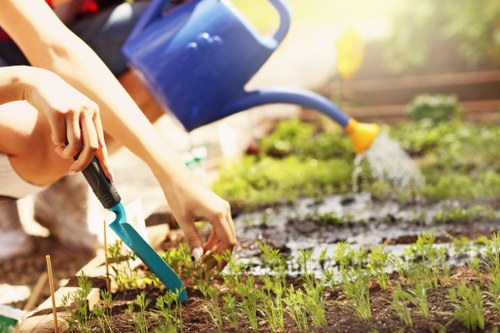 This health and safety policy sets out the standards followed by our landscaping team in Bethnal Green when carrying out garden work, site clearance, and ongoing grounds maintenance. Whether the task involves trimming hedges, moving soil, managing tools, or handling garden rubbish, safety remains central to every job. Our approach is designed to protect workers, clients, visitors, and the public while maintaining a clean, organised, and professional service.
Health and safety is not treated as a separate part of the job; it is built into every stage of planning and delivery. Before any work begins, risks are considered, equipment is checked, and the work area is assessed for hazards such as uneven ground, hidden debris, sharp objects, low branches, and nearby traffic. This is especially important for landscaping services in busy residential and commercial settings where access can be limited and rubbish removal must be managed carefully.
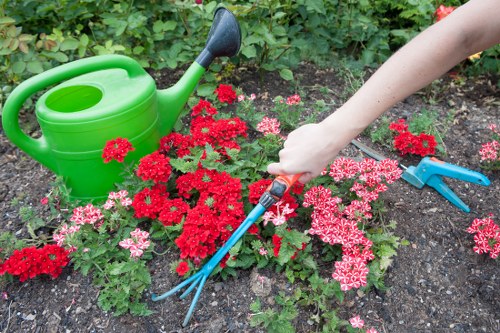 Our landscapers are expected to follow safe working practices at all times. This includes using the correct protective equipment, keeping tools in good condition, lifting materials properly, and storing waste safely until it can be removed. Special attention is given to rubbish handling, because green waste, soil, broken fencing, and general outdoor debris can create slip, trip, and contamination risks if not controlled correctly.
We aim to keep each site tidy from start to finish. Good housekeeping reduces accidents and improves the overall quality of the service. Pathways are kept clear wherever possible, loose materials are stacked securely, and waste is separated where practical so that disposal can be completed efficiently. For a landscaper in Bethnal Green, this standard is essential when working in compact gardens, shared access areas, and properties where residents or other trades may be present.
All employees and contractors are required to understand the risks associated with their tasks. These may include manual handling, cuts from tools, dust exposure, noise, flying debris, and contact with chemicals used for treatment or cleaning. Risk awareness is reinforced through briefing, supervision, and sensible work routines. Safe landscaping services depend on everyone taking responsibility for their own actions and for the condition of the work area.
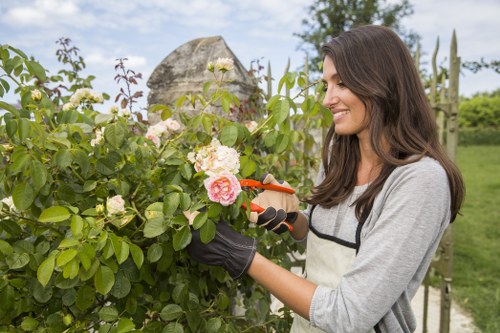 Where machinery is used, it must be suitable for the task and maintained according to manufacturer instructions. Fuel, batteries, and electrical equipment are handled carefully to prevent fire, shock, and leakage. Operatives must never bypass guards or use damaged tools. Protective gloves, eye protection, sturdy footwear, and other relevant PPE are worn as needed, particularly during cutting, loading, pruning, and waste collection work.
Manual handling is one of the main concerns in outdoor work, especially when lifting bags of soil, paving materials, branches, or bulky rubbish. Loads should be assessed before lifting, and team lifting should be used when necessary. Operators are trained to avoid strain and to use equipment such as wheelbarrows, sacks, trolleys, and lifting aids where appropriate. This helps reduce injury while keeping the service efficient and reliable.
Weather conditions are also considered. Heat, frost, heavy rain, strong wind, and poor visibility can all affect safe working. Tasks may be delayed, adjusted, or stopped if conditions become unsafe. Surfaces can become slippery and unstable, and outdoor rubbish may become harder to manage during wet weather. For a landscape maintenance team, these decisions are part of responsible working practice and help prevent avoidable incidents.
Communication is maintained throughout each project so that everyone on site understands the task sequence, any changing hazards, and the correct disposal arrangements for waste. The team uses a straightforward system for reporting incidents, near misses, broken equipment, or unsafe conditions. Prompt reporting ensures that problems are addressed quickly and that lessons can be applied to future work.
Environmental responsibility also supports safety. Green waste, soil, timber, and general garden rubbish are sorted and removed in a controlled way to avoid clutter and contamination. Sharp waste, treated timber, and potentially hazardous items are handled separately where needed. This careful approach helps us maintain a tidy finish while reducing the risk of accidents during collection and transport.
Clients and occupants are expected to keep clear of active work zones whenever possible. Clear boundaries, sensible timing, and visible awareness of foot traffic all help reduce disruption. In shared spaces, our landscaping company takes extra care around children, pets, parked vehicles, and neighbouring properties. The aim is to provide a safe and orderly service without unnecessary disturbance.
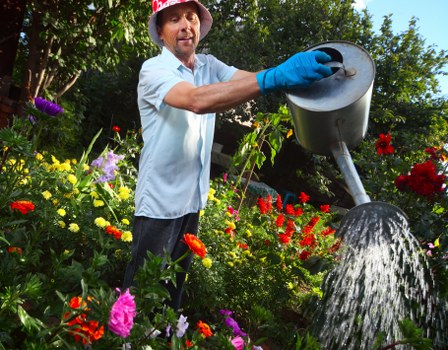 Regular reviews of this policy help ensure that working methods remain effective and up to date. Feedback from internal inspections, equipment checks, and incident records is used to improve standards. Health and safety in landscaping is a continuous commitment, not a one-off exercise, and it applies equally to small garden tasks and larger clearance or maintenance projects.
 By following this policy, our team supports a safer working environment and a more dependable service for every site we attend. Careful planning, responsible tool use, clean working habits, and safe rubbish handling all contribute to a professional result. For customers seeking landscapers in Bethnal Green, this means outdoor work carried out with attention, control, and respect for people and property.

